
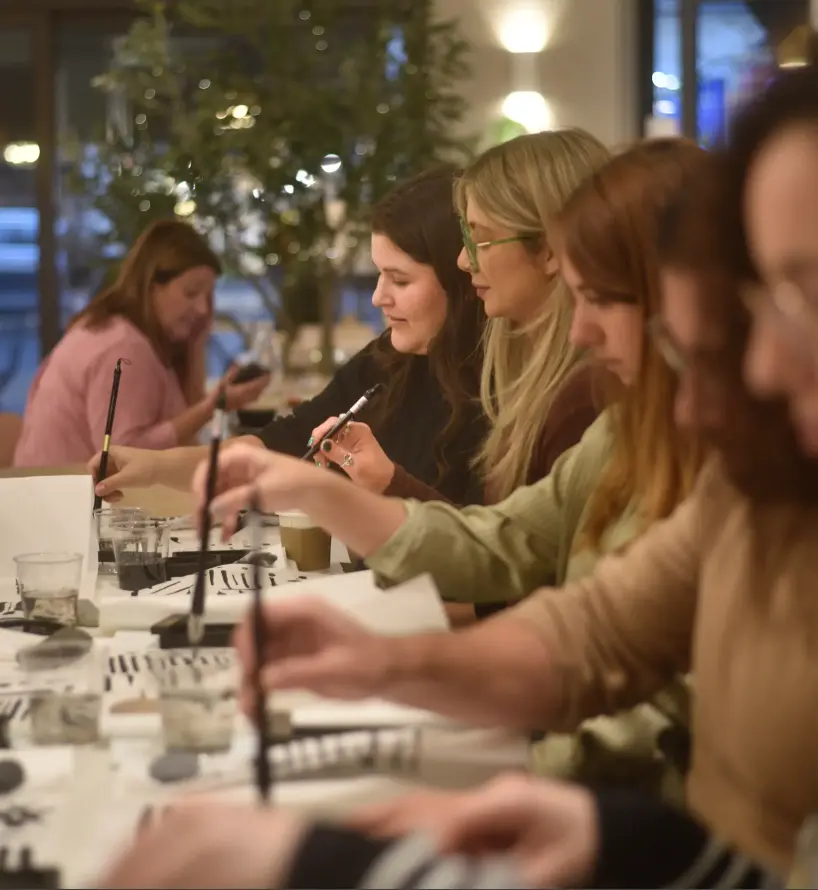
The best creative team session is not simply the activity that looks most impressive. It is the one whose pace, meaning and practical setup fit the people in the room.
Start with the outcome, not the craft
Before comparing corporate art workshop ideas, decide what the session needs to change. A social away day may need easy conversation between colleagues who rarely meet. A wellbeing programme may need a calm, screen-free pause. A team navigating change may benefit from a creative process that gives reflection a practical shape.
Choose Kintsugi when the brief centres on resilience, change, repair or team reflection. Choose Sumi-e for calm, focus and a reset after screen-heavy work. Choose watercolour when you want colour, conversation and an open, sociable atmosphere. A clear outcome helps the artist-facilitator shape the demonstrations and tone without turning the workshop into a forced corporate exercise.
Compare Kintsugi, Sumi-e and watercolour
A corporate Kintsugi workshop is tactile, purposeful and rich in meaning. Participants repair a ceramic object and highlight its joins, creating a memorable object to take away. It is especially suited to leadership days, organisational change, resilience themes and thoughtful team building.
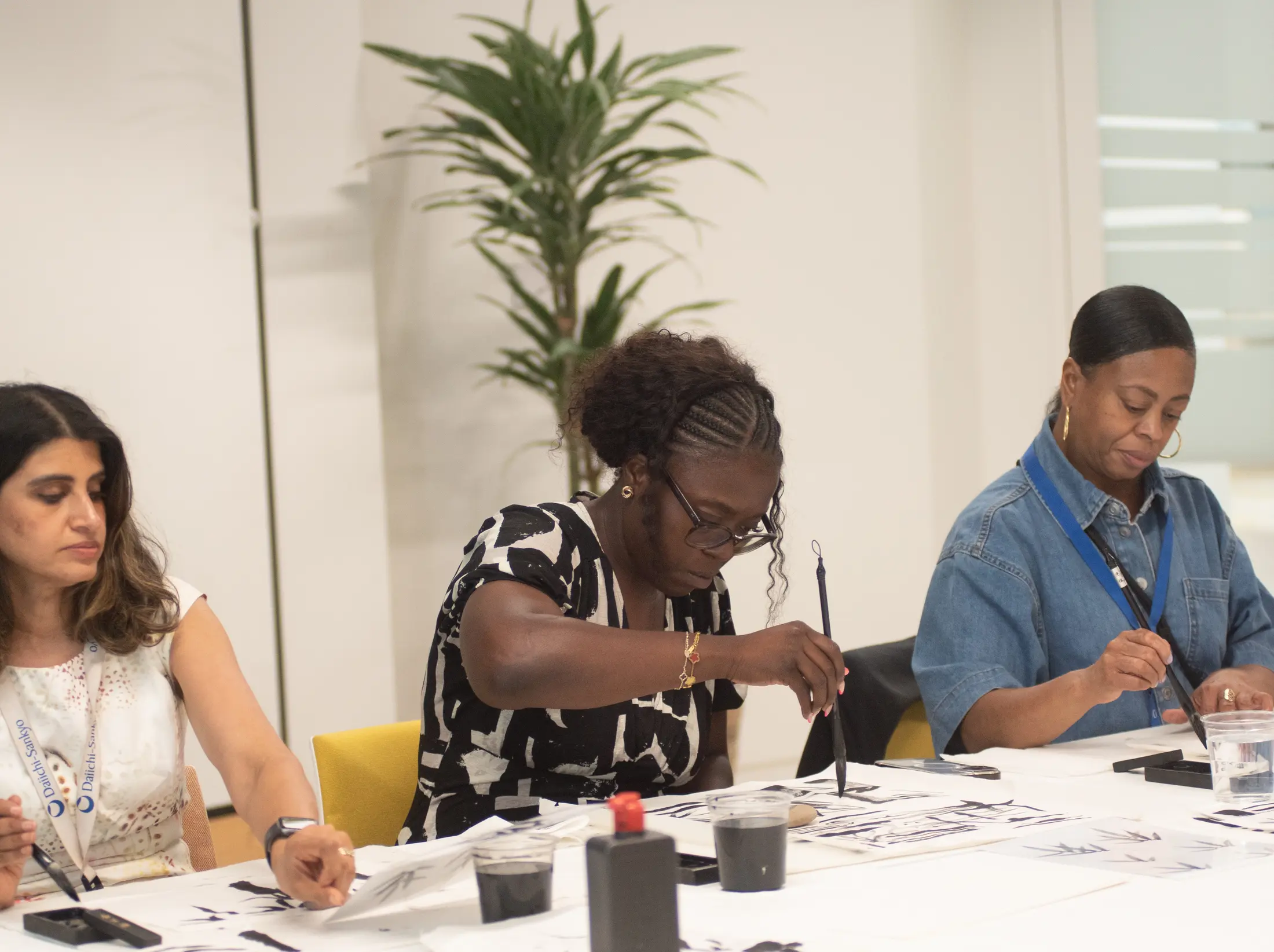
A Sumi-e workshop uses Japanese ink painting to explore brush pressure, rhythm and empty space. The simplicity of ink, brush, water and paper makes it ideal for workplace wellbeing, mindfulness and conference sessions. Watercolour is the most naturally social option: it is colourful, forgiving and easy to adapt around a seasonal subject, company event or relaxed company celebration.
Match the format to the energy of the day
Sixty minutes works well as a conference breakout or an introduction during a workplace wellbeing week. It needs a focused subject and efficient setup. Ninety minutes gives participants time to arrive mentally, learn the technique and make something satisfying. For many London team-building events, this is the strongest balance.
A two-hour session allows for a richer finished piece, individual support and unhurried conversation. A half-day is useful when the workshop is the main away-day activity rather than one item in a busy agenda. Avoid placing a reflective workshop immediately after a late lunch or between two intense presentations; a small change in timing can transform engagement.
Consider confidence, accessibility and group size
The right creative team-building activity must welcome complete beginners. Ask whether the facilitator demonstrates every stage, provides examples without expecting identical results, and has a plan for participants who work at different speeds. Nobody should need to describe themselves as artistic before they can belong in the room.
Share any access requirements early, including seating, mobility, visual or hearing needs and preferred communication styles. Group size affects table layout, demonstration visibility, staffing and the amount of individual guidance possible. A well-designed large-group workshop should still feel personal rather than like a production line.
Plan the venue and materials early
Confirm participant numbers, table layout, access time, water access where needed, ventilation and the route between delivery access and the workshop room. Cabaret or boardroom tables usually work better than theatre seating because each person needs a stable working surface and a clear view of the demonstration.
Ask what is included in the proposal: artist facilitation, materials, protective table coverings, setup guidance, clean-down and any safety documentation. Artivian supplies the workshop materials and practical planning support. A clear venue plan keeps the experience calm from arrival and protects the wider event schedule.
Use a concise workshop brief
A useful brief includes the date, London or UK location, participant number, available duration, event purpose and preferred workshop. Add venue access times, room photographs or a floor plan if available. If the craft is still undecided, describe the atmosphere you want and let the facilitator recommend the strongest format.
The best corporate art workshop is not the one with the longest list of features. It is the one people can enter without anxiety, enjoy together and remember for the right reason. When outcome, format and practical delivery align, creative team building feels generous rather than imposed.