
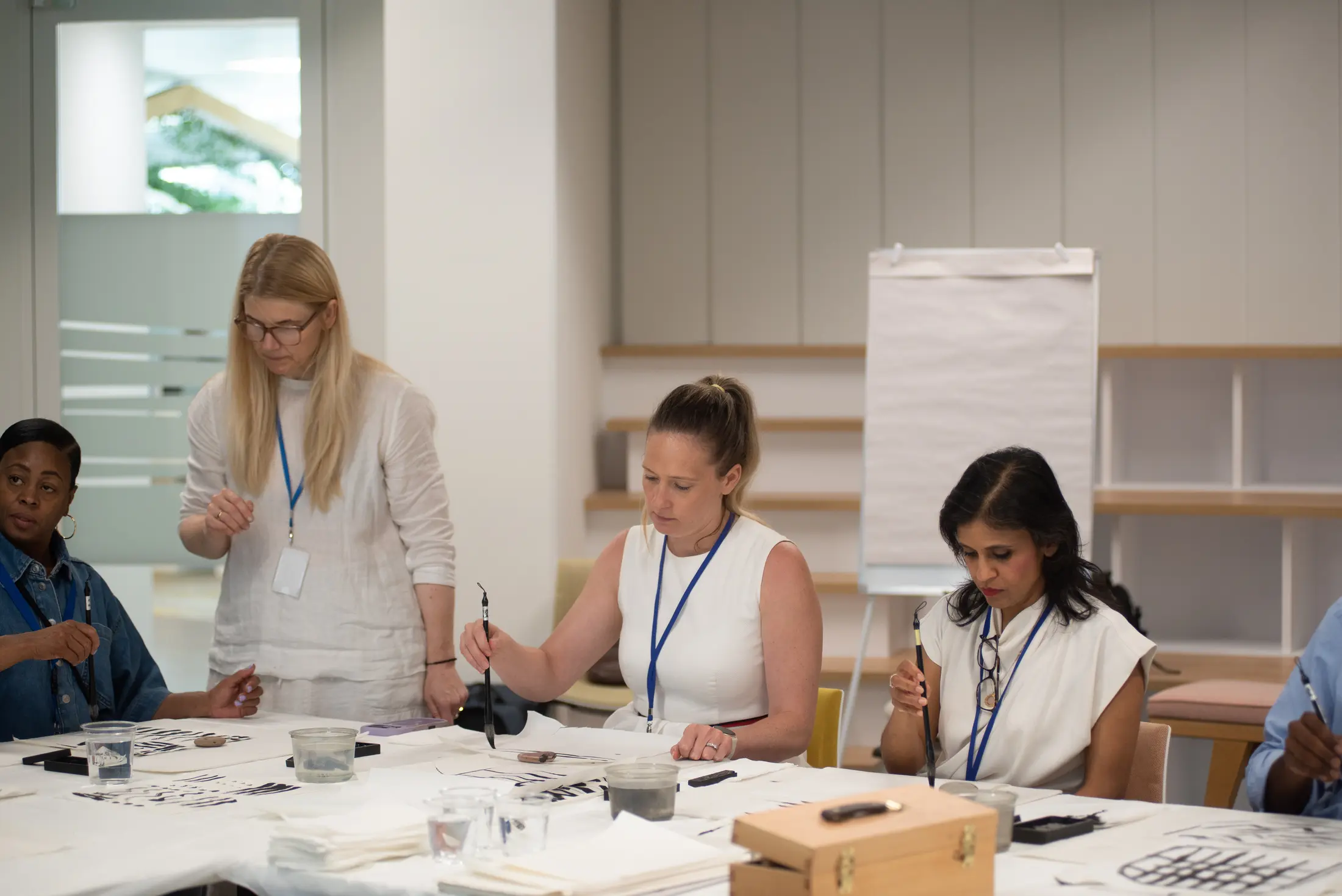
Sumi-e asks for attention without demanding perfection. That combination makes it a particularly useful creative reset for modern teams.
What is Sumi-e?
Sumi-e is a Japanese ink-painting tradition built around attentive brushwork, economy and expressive use of empty space. A small set of materials—brush, ink, water and paper—creates a surprisingly rich range of tones and marks. Participants learn how posture, pressure, speed and moisture change the result.
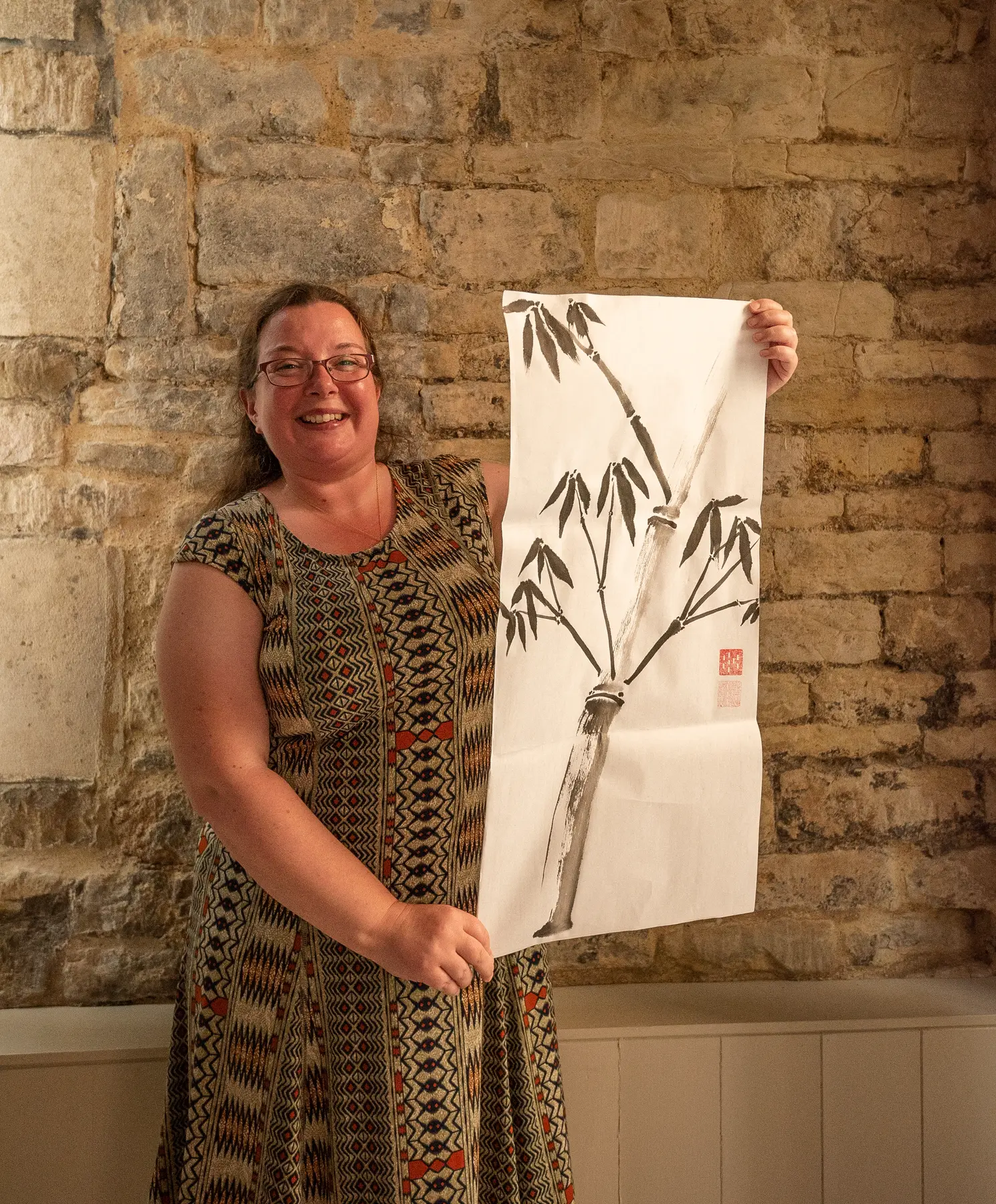
In a corporate Sumi-e workshop, the tradition is introduced respectfully and accessibly. The session focuses on observation and practical technique rather than art-historical performance. Simple demonstrations lead towards a finished botanical or nature-inspired composition that still leaves space for an individual hand.
Fewer materials, greater attention
Modern work constantly asks people to switch context. Sumi-e moves in the opposite direction. The limited palette removes many decisions and invites participants to notice one brushstroke at a time. Loading the brush, testing the ink and watching water travel through paper naturally slows the pace.
This makes Japanese ink painting especially suitable for workplace wellbeing. Calm is not demanded as an outcome; it emerges from the structure of the activity. People have a practical task to return to, which can feel more accessible than being asked to sit still or discuss stress directly.
A genuine screen-free creative reset
After video calls, spreadsheets and presentations, physical materials change the quality of attention. A brushstroke cannot be undone with a keyboard shortcut. That gentle commitment encourages presence without requiring perfection. Participants learn to respond to the mark they have made rather than judge it against a digital ideal.
A Sumi-e workshop can sit between strategic sessions, open a wellbeing day or close a conference programme. Ninety minutes is often enough to shift the room’s energy while still producing a satisfying piece of work. A longer format allows more experimentation and individual guidance.
Accessible to complete beginners
Good beginner facilitation breaks each subject into visible, repeatable movements. Participants practise individual strokes before combining them. Examples provide direction, but variation is expected: expressive ink painting becomes interesting precisely because pressure, rhythm and water behave differently in every hand.
The aim is not a room of identical pictures. It is attentive making and a finished work each participant recognises as their own. This removes much of the anxiety that can accompany a corporate art activity, particularly for colleagues who have not painted since school.
How Sumi-e supports team connection
Although the practice encourages individual focus, the shared learning creates quiet connection. Colleagues compare the behaviour of their brushes, notice one another’s interpretations and offer spontaneous encouragement. Conversation can ebb and flow without becoming the measure of participation.
That balance works well for mixed teams. More outgoing participants can share discoveries, while quieter colleagues are not required to compete for attention. The common challenge creates equality, and the atmosphere often becomes both concentrated and warm.
Planning a workplace Sumi-e session
Provide stable tables, comfortable seating and a clear view of the artist. Water access nearby helps setup, while protective table coverings keep the venue straightforward. Share participant numbers, room layout, available duration and any access needs early so materials and demonstrations can be planned accurately.
Choose Sumi-e when your team needs focus, calm and creative flow. Choose Kintsugi when the brief is specifically about change or resilience, and watercolour when social energy and colour are the priority. Artivian delivers beginner-friendly Sumi-e corporate workshops in London and across the UK.