
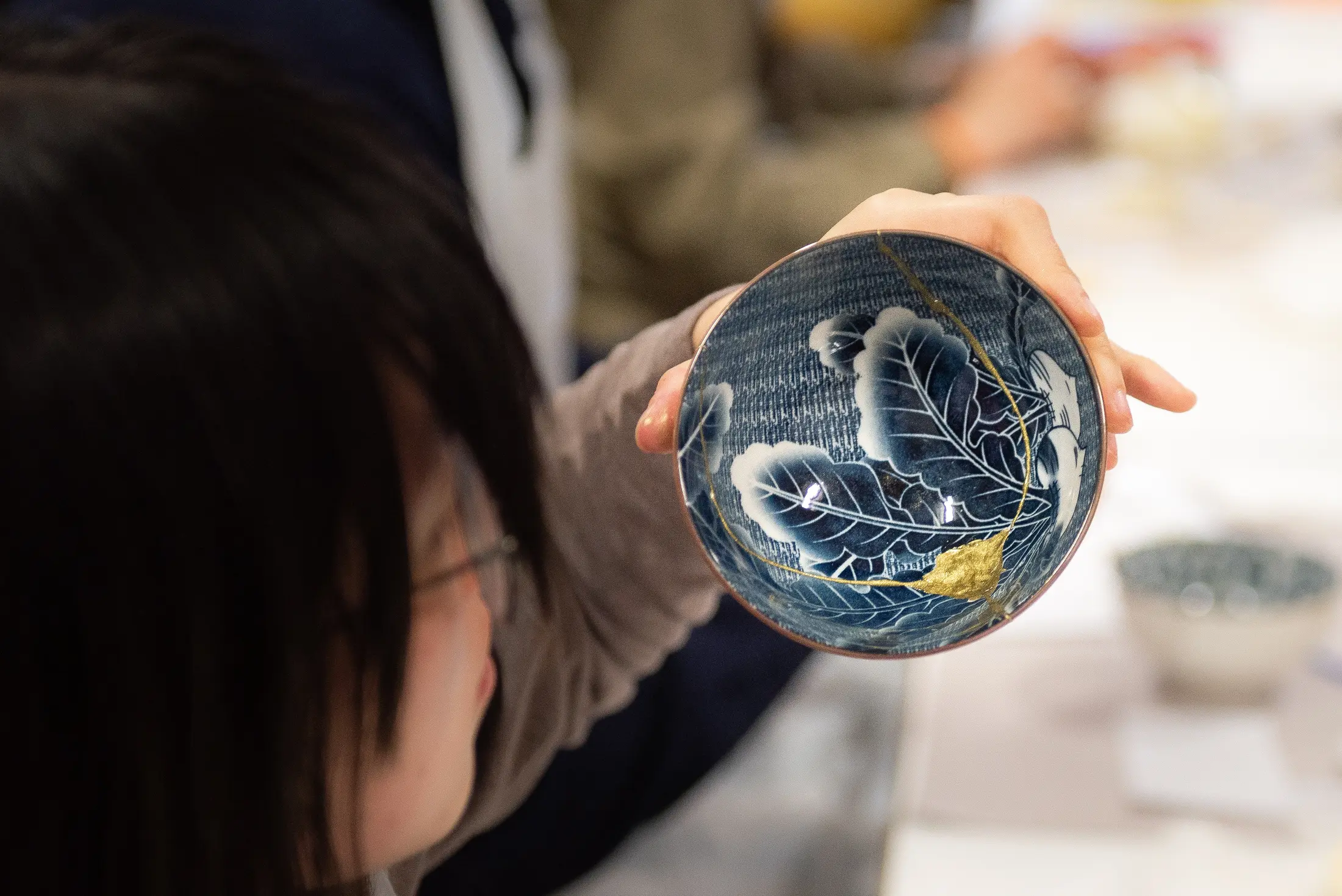
Kintsugi gives teams a shared metaphor they can hold in their hands: change does not need to be hidden for something to remain valuable.
What happens in a corporate Kintsugi workshop?
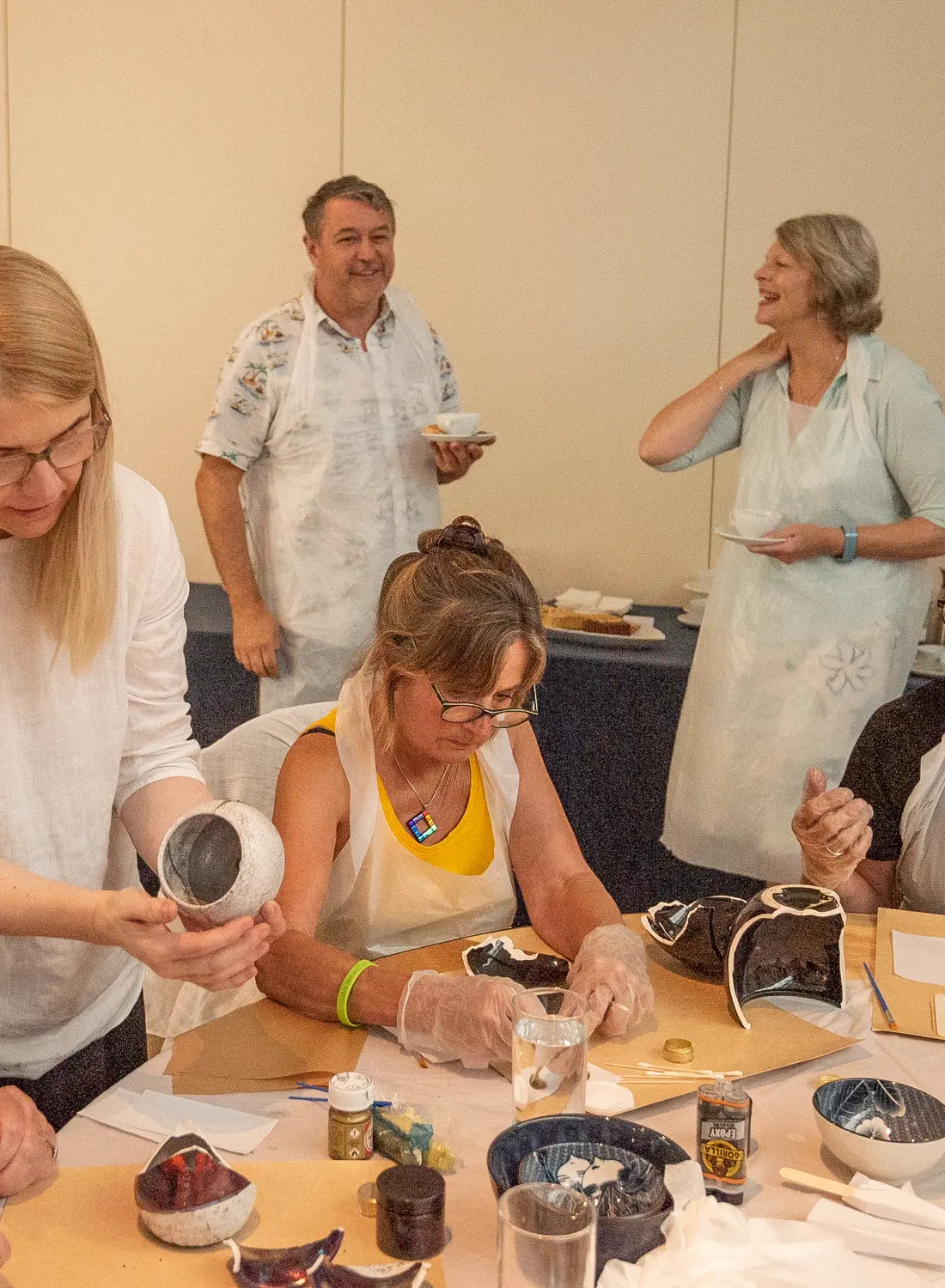
Kintsugi is the Japanese art of visible repair. In an Artivian corporate workshop, participants learn a safe, event-appropriate contemporary method: preparing ceramic pieces, joining them carefully and highlighting the repaired lines. The experience is practical first, with the philosophy introduced in a way that supports rather than overwhelms the making.
Every participant works through the same stages but produces an individual result. The repaired object becomes a tangible reminder of the session, which gives Kintsugi a longer life than many conventional team-building activities. The workshop can be delivered in offices, hotels, conference venues and away-day settings across London and the UK.
A shared process without forced performance
Everyone begins as a learner. Seniority and job title become less visible when the group is concentrating on the same unfamiliar material. Natural conversation develops around practical questions, small discoveries and the pleasure of seeing an object come together.
This is collaborative team building without competition. Participants do not have to perform, present or disclose a personal story. They can engage with the symbolism deeply, lightly or simply enjoy learning the technique. That freedom makes the format more inclusive for mixed personalities and professional cultures.
Why visible repair supports conversations about change
Organisational change is often discussed through abstract language. Kintsugi offers a physical process: something altered is handled with care, reassembled and given a new visual identity. The repair is not concealed. This can open a thoughtful conversation about adaptation, continuity and the knowledge a team carries forward.
The facilitator should never force a corporate message onto the object. A short introduction and optional reflection are usually enough. The strength of the metaphor lies in allowing people to make their own connections while sharing the experience with colleagues.
Resilience without empty slogans
Resilience can become an unhelpful workplace word when it suggests that individuals should simply absorb more pressure. A responsible Kintsugi workshop does not claim that every break is beneficial or that repair returns something to its previous state. It recognises care, support, time and visible change.
For teams working through restructure, merger, rapid growth or a demanding period, that nuance matters. The session creates breathing room and a shared reference point. It can complement a wider leadership or wellbeing programme, but it is not therapy and should not be presented as a replacement for professional support.
Planning the time, room and group
A 90-minute or two-hour Kintsugi workshop gives the best combination of technique, making and reflection. Shorter conference versions are possible with a tightly controlled format. Participants need table seating, a stable working area and good visibility of the artist demonstration. Venue access before and after the session allows calm setup and clean-down.
Group size, object choice and materials influence the delivery plan. Share participant numbers, venue details and the role of the workshop in the wider event. Artivian can provide risk assessment, method statements and relevant safety information for corporate venues and event agencies.
When Kintsugi is the right team-building choice
Choose Kintsugi for a leadership away day, team reconnection, workplace wellbeing programme or company event where meaning matters as much as entertainment. It is particularly strong when a team is exploring change, resilience, repair, collaboration or a new chapter.
Choose a more openly social watercolour workshop if the priority is celebration and colour, or Sumi-e if the group needs calm attention after intensive meetings. The best result comes from matching the craft to the real emotional and practical purpose of the day.