
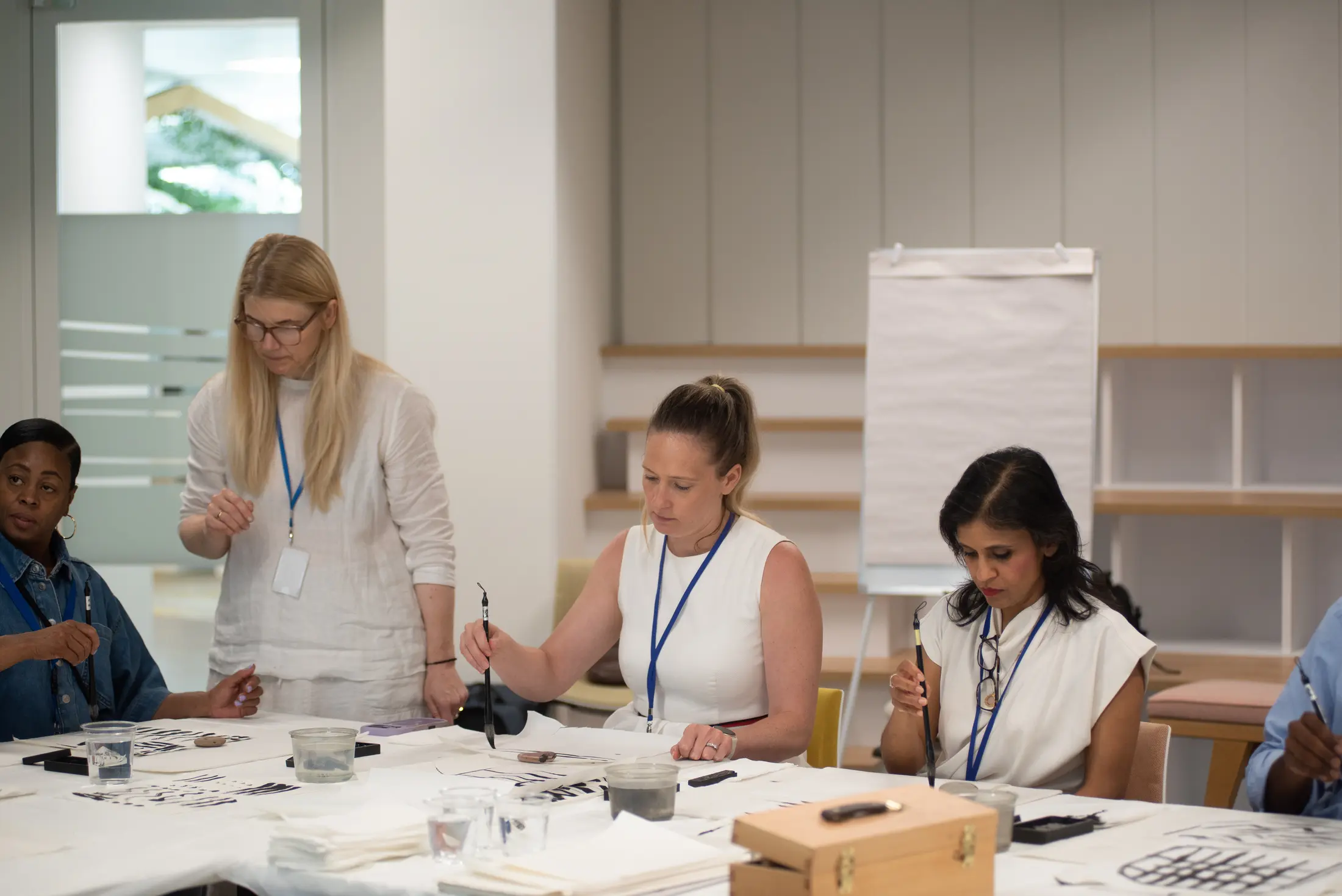
A workplace art workshop can create calm, curiosity and connection, but only when it respects participants and sits inside a wider culture of care. Creativity should be an invitation, not another performance target.
Wellbeing is not a single workshop
No creative activity can compensate for unsustainable workload, poor management or a lack of psychological safety. Responsible workplace wellbeing programmes address structural conditions as well as offering restorative experiences.
Within that wider approach, an art workshop can provide a meaningful pause. It changes the pace, engages hands and attention, and gives colleagues a way to be together that is not centred on output. The value lies in the quality of the experience, not exaggerated health claims.
Why making feels different from another talk
Wellbeing presentations still ask employees to listen, interpret and often look at a screen. Making introduces touch, movement, materials and immediate feedback. Attention shifts from abstract advice to a manageable action: mixing a colour, loading a brush or joining a ceramic piece.
That concrete focus can help people settle without requiring them to explain how they feel. Conversation happens naturally, and silence is equally acceptable. A well-facilitated room can hold both social connection and private concentration.
Choose the workshop by desired atmosphere
Sumi-e is particularly effective when the group needs calm, focus and a visual break from digital work. Watercolour suits a brighter, more conversational wellbeing event. Kintsugi brings reflection and meaning, especially where a team is navigating change.
The choice should also reflect available time, venue and group size. A beautiful idea can fail if rushed into the wrong room. Ask the facilitator to recommend a format after hearing the full brief rather than selecting solely from photographs.
Make participation genuinely inclusive
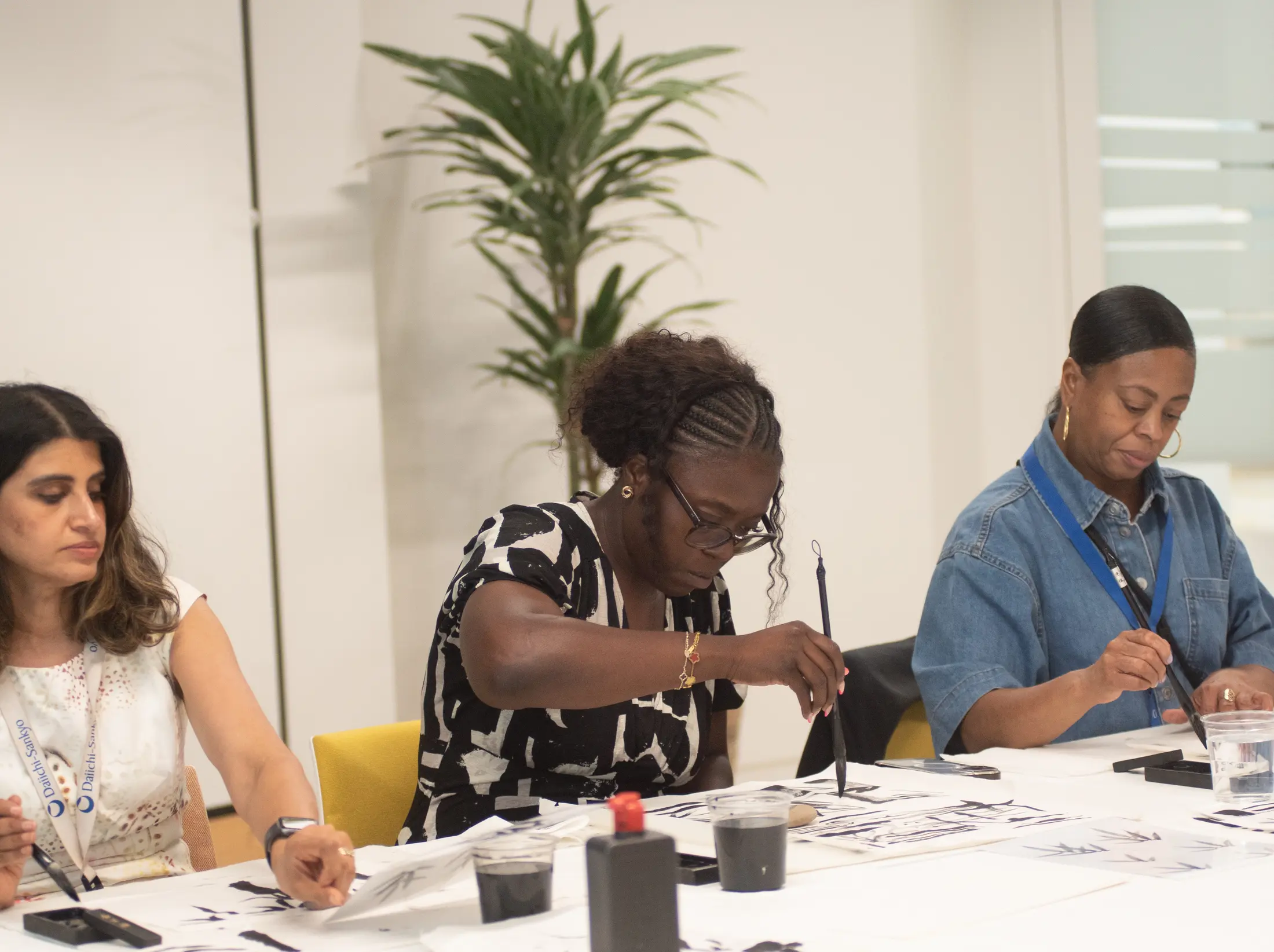
Describe the session as beginner-friendly and avoid language about talent. Demonstrations should be clear, paced and visible. Participants need permission to interpret the example rather than reproduce it perfectly, and facilitators should offer help without taking over.
Consider physical access, sensory needs, seating, materials and communication preferences. Do not require personal disclosure or attach emotional interpretations to somebody’s artwork. An optional invitation creates more engagement than compulsory enthusiasm.
Plan for psychological safety
If a workshop relates to resilience or change, brief the facilitator on the organisational context and any sensitive language. Keep reflection proportionate to the event. Creative facilitators can hold thoughtful discussion, but they should not present the workshop as clinical treatment.
Leaders set the tone by participating without dominating or judging outcomes. When senior colleagues are willing to learn visibly and make imperfect work, the room often becomes more relaxed for everyone.
Measure quality without undermining it
Useful feedback can be simple: did participants feel welcome, was the pace appropriate, did they value the screen-free time, and would they choose a similar session again? Observe whether engagement extended across roles and personalities.
Avoid measuring artistic quality. The relevant outcome is the experience—attention, connection, enjoyment and a sense of having made something. Artivian designs Kintsugi, Sumi-e and watercolour wellbeing workshops for workplaces in London and across the UK.